Picture this: It’s one of those days where everything piles up. You’re rushing through morning traffic, your heart pounding like a drum in your chest. By midday, work emails are flooding in, and that tight knot in your stomach just won’t loosen. I remember a day like that last month—kids screaming for breakfast, a looming deadline, and my mind spinning like a hamster wheel. I felt completely overwhelmed, like I couldn’t catch my breath.
That’s when I turned to something so simple it almost feels like magic: deep breathing. In just a few minutes, it melted away the tension, leaving me clearer and calmer. No fancy equipment, no gym membership—just you, your breath, and a quiet moment. Today, I’ll walk you through easy techniques that anyone can try right now for quick stress relief. You’ll feel lighter before you know it.
Deep breathing isn’t about forcing anything. It’s a gentle way to signal your body to relax. We’ll start with the easiest ones, build from there, and fit them into your real life. Many folks I’ve chatted with say it’s their go-to for those hectic moments. Ready to breathe easier? Let’s dive in together.
If This Sounds Like You
Your heart races during rush-hour traffic, making every red light feel endless.
Deadlines at work leave your chest tight, like you can’t quite expand fully.
Endless to-do lists swirl in your mind, turning quiet evenings into worry sessions.
Bedtime worries keep sleep just out of reach, no matter how tired you are. You’re not alone—many people feel this way in our busy world. It’s okay if stress sneaks up; we’ve all been there.
Why Your Breath Holds the Key to Instant Calm
Your breath is always with you, a built-in tool for calm. When stress hits, it often gets shallow and quick, keeping your body in fight-or-flight mode. Deep breathing flips that switch, activating your body’s natural relaxation response gently.
It lowers cortisol levels without any effort, easing that wired feeling. I used it before a big team meeting last week—inhaled deeply, and suddenly my thoughts settled. Science backs this warmly: slower breaths tell your nervous system it’s safe to unwind.
Think of it as a hug from the inside out. No need for complicated explanations; just feel the shift yourself. Many find it pairs beautifully with building calm habits at home, like in a weekly plan to build calm habits at home.
Try This First: The Easiest 4-7-8 Breath for Beginners
Let’s begin with the 4-7-8 breath, perfect for newcomers. It’s simple, takes just a minute, and works anywhere. Dr. Andrew Weil popularized it, but we’ll keep it cozy and straightforward.
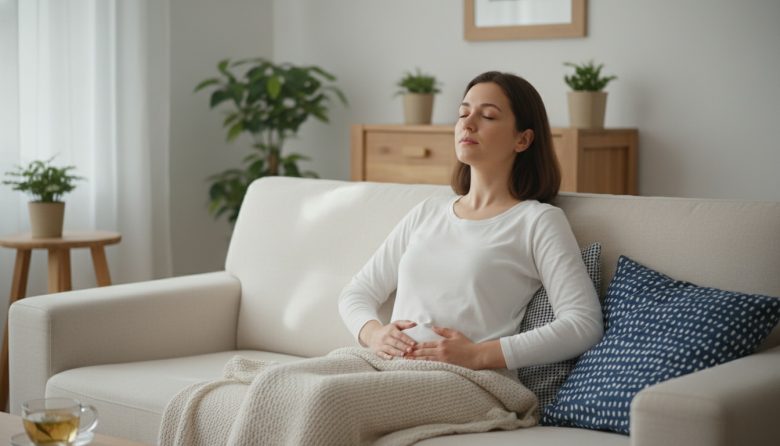
Find a comfy spot—sitting or lying down. Close your eyes if it helps. Place one hand on your belly to feel the rise and fall.
Inhale quietly through your nose for a count of 4. Hold that breath for 7 counts. Then exhale through your mouth for 8 counts, making a gentle whoosh sound.
That’s one round. Try just 4 rounds to start—you’ll feel lighter already. If holding feels tricky, shorten the counts. It’s okay if it’s not perfect; consistency matters more.
- Sit or lie comfortably, feet flat if seated, hands relaxed by your sides.
- Place one hand on your belly, the other on your chest—aim for belly movement only.
- Inhale slowly through your nose for 4 counts, letting your belly rise like a soft balloon.
- Exhale fully through pursed lips for 6-8 counts, feeling your belly fall completely.
Practice with a phone timer for ease. This mastering belly breathing basics builds the foundation for all techniques. Do it daily, even for a minute, and watch stress fade.
Level Up: Box Breathing to Reset During Tough Moments
Once 4-7-8 feels familiar, try box breathing for those tougher spots. It’s like drawing a square with your breath: equal sides for balance. Navy SEALs use it, but it’s gentle for everyday us.
Imagine a box—inhale for 4 counts, hold for 4, exhale for 4, hold for 4. Repeat 4-5 times. Picture family chaos at dinner or a stressful call; this resets you fast.
My tip: Visualize the box glowing softly as you breathe. It turns a frantic moment into steady calm. I did it during a kid’s meltdown last week—poof, patience returned. What tough moment will you try it on first?
Make It Your Own: Variations for Your Life’s Rhythm
Deep breathing shines when tailored to you. For mornings, try a wake-up version: 5 deep belly breaths while stretching in bed. Feel the day start fresh.
On walks, sync breaths with steps—inhale for 4 steps, exhale for 4. It turns errands into mini-rests. At bedtime, pair with an evening routine for restful nights to quiet racing thoughts.
Love scents? Add lavender oil under your nose. Standing at a desk? Breathe deeply without moving much. Kid interruptions? Make it a game—breathe together. It’s okay if life tweaks it; adapt and keep going.
Another fun one: gratitude breaths. Inhale peace, exhale worry, linking to a how to start a simple daily gratitude practice. Play until it fits your flow perfectly.
Weaving Deep Breaths into Your Everyday Flow
Integration happens gently, without big changes. Use triggers like a phone buzz—pause for one deep breath before checking. Before meals, breathe three times to savor the moment.
Here’s a simple checklist to build consistency:
- Morning: 4-7-8 upon waking.
- Midday: Box breath during lunch break.
- Evening: Belly breaths before bed.
- Anytime stress spikes: One full cycle, anywhere.
Tick them off loosely—no pressure. Community stories warm my heart: One reader breathed through a tough commute, arriving home smiling. Another wove it into family dinners, easing evening tensions. You’re joining a circle of calm-builders. What trigger calls to you?
Over time, it becomes automatic, like brushing your teeth. Share your wins; we cheer each other on. Small weaves create big ripples in your day.
Breathing Through Bumps: What If It Feels Awkward?
First tries might feel odd—totally normal. Dizzy from holding? Shorten counts or skip holds. Start with 2-3-4 if needed.
Noisy exhales bothering you? Soften to a whisper. It’s okay if roommates hear; explain it’s your calm trick. Practice alone first for confidence.
Mind wanders? Gently return—no judgment. Many say it takes a week to smooth out. You’re not failing; you’re learning a lifelong skill. Keep at it, friend.
FAQ
How long until I notice stress relief?
You might feel a shift in just 1-2 minutes with 4 rounds. For some, it’s instant lightness in the chest. Build with daily practice, and deeper calm grows over days or weeks. Be patient; your body learns quickly.
Can I do this at work without looking weird?
Absolutely—eyes open, subtle hand on lap. It looks like a thoughtful pause. Desk workers do it mid-meeting mentally. No one notices, but you feel the reset. You’re not alone in sneaky calm moments.
What if I have asthma—is deep breathing safe?
Yes, for most, but check with your doctor first. Start slow, avoid strain, focus on gentle nose breaths. Many with asthma love it for easing tightness. Listen to your body; shorten if needed. It’s a supportive tool, not a cure.
Do I need to sit cross-legged?
No way—sit in your chair, stand, or lie down. Whatever feels natural works best. Adapt for office, car, or couch. Comfort invites consistency. Make it yours from day one.
How often should I practice for best results?
Aim for 3-5 minutes daily, split however fits. More during stress is fine. Consistency over perfection—once a day builds the habit. Track gentle progress; you’ll crave those calm breaths soon.
What’s one spot you’ll try breathing today? Share in the comments—we’re here cheering you on!