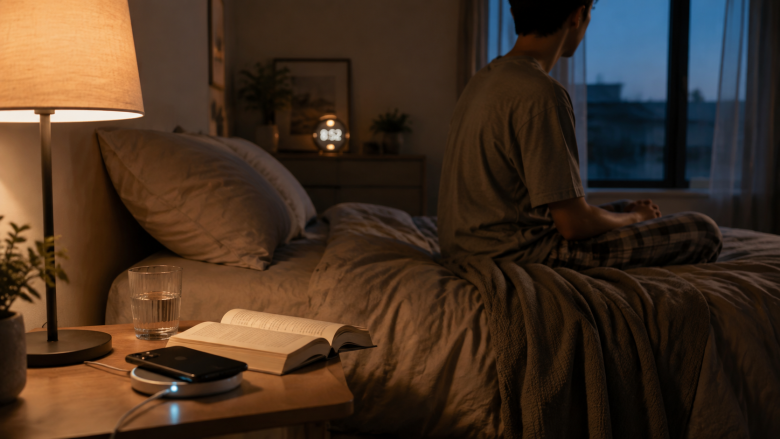
Why Your Sleep Schedule Feels Broken (And It's Not Your Fault)
If you are a teenager, you have probably been told to "just go to bed earlier" or "put your phone away" - and you have probably also discovered that those tips do not work. The problem is not that you are lazy or undisciplined. Your body's internal clock has actually shifted later during adolescence. This is called delayed sleep phase, and it means your brain naturally wants to fall asleep around 11 PM or midnight, not at 9 PM. That's why going to bed at 10 PM feels like trying to sleep at 7 PM for an adult.
But here is the thing: you can work with your biology instead of against it. This guide is not about following a family bedtime or being told what to do. It is about building a sleep system that gives you more control over your mood, energy, and performance. The goal is not to become a "perfect sleeper" - it is to feel better during the day, get more done, and have more freedom to enjoy your life. And the best part? You get to choose how to do it.
I have spent years coaching teens on sleep, and I have seen what works and what fails. The biggest mistake I made early on was treating sleep like a set of rules to enforce. That never worked. The teens who succeeded were the ones who took ownership of their sleep because they understood the payoff - better focus, better mood, better athletic performance, and less stress. So let's build your sleep habits from the inside out.
The Real Problem: Your Biology Is Not Broken, It's Just Delayed
Before we get to the steps, you need to understand why your current sleep pattern feels so hard to change. During puberty, your brain's circadian rhythm - the internal 24-hour clock - shifts later. Melatonin, the hormone that makes you sleepy, is released later in the evening for teens than for children or adults. According to the National Institute of Neurological Disorders and Stroke, this shift is biological, not a choice.
That means if you try to fall asleep at 10 PM, your body may not be ready. You lie there, scrolling or staring at the ceiling, feeling frustrated. Then you wake up at 7 AM for school, and by the weekend you crash - sleeping until noon on Saturday. That Sunday night, you cannot fall asleep until 1 AM, and the cycle repeats. This weekend oversleeping creates what sleep researchers call "social jetlag" - your body is living in a different time zone on weekends compared to weekdays.
The good news? You can reset your biological clock, but you have to do it in a way that respects your natural delay. The key is not forcing an earlier bedtime overnight. Instead, you anchor your wake time and use morning light to pull your clock earlier. Let me show you how.
The Teen Sleep System: Three Levers You Control
I have worked with dozens of teens, and the ones who succeed use a simple framework I call the "Three Levers." You do not need to overhaul your entire life. You just need to pull these three levers consistently:
- Wake Time Anchor: Pick a non-negotiable wake time, even on weekends.
- Morning Light: Get bright light in your eyes within 30 minutes of waking.
- Habit Stacking: Attach your wind-down routine to an existing cue.
That's it. These three levers work together to shift your circadian rhythm earlier and make falling asleep easier. They are not about willpower - they are about biology. Let's break down each one.
Lever 1: Choose Your Non-Negotiable Wake Time
Most sleep advice says to "go to bed at the same time every night." That is backwards for teens. Your bedtime is determined by your wake time, not the other way around. When you wake at the same time every day, your body builds a consistent sleep pressure that makes you naturally sleepy at the right time the following night.
Here is what I tell every teen I coach: pick a wake time you can commit to seven days a week, including weekends. It should be a time that gives you enough sleep - aim for 8 to 10 hours per night, as recommended by the Centers for Disease Control and Prevention. If you need to be up at 6:30 AM for school, your wake time is 6:30. On weekends, you might want to sleep in, but if you push it past 8:30 AM, you will shift your clock and make Monday brutal.
When I first tried this with a client named Jake, he refused to wake up early on Saturday. He said, "That's my only day to sleep." I asked him to try one weekend: wake at 7:30 AM, then get outside for 10 minutes. He did, and by Sunday night he was falling asleep at 11 PM - something he hadn't done in months. The wake anchor works because it consolidates your sleep pressure. You will be tired earlier, and that's a good thing.
What if you are not a morning person? That's fine. The wake time does not have to be 6 AM. It just has to be consistent. If you can wake at 8 AM every day, do that. But if school starts at 8:30, you might need an earlier anchor. The key is to choose a time that works for your schedule and stick to it, no exceptions.
Lever 2: Use Morning Light as Your Biological Lever
Light is the most powerful cue for your circadian rhythm. When bright light hits your eyes, your brain suppresses melatonin and signals that it's daytime. This pushes your internal clock earlier, making it easier to fall asleep at a reasonable hour that night. The earlier you get light, the stronger the effect.
Here is the practice: within 30 minutes of waking, get outside for at least 5 to 10 minutes. No sunglasses. No phone. Just daylight. If it's cloudy, that's fine - even overcast light is much brighter than indoor lighting. If you wake before sunrise, use a bright lamp (10,000 lux) or a light therapy box. But for most teens, a quick walk to the bus stop or eating breakfast near a window works.
I remember a student who told me she couldn't go outside because she had online classes at 7 AM. I suggested she eat her breakfast on her balcony for five minutes. She did, and she reported that her afternoon energy improved significantly. The light doesn't have to be a workout - just exposure. Combine this with your wake anchor, and you are telling your body, "Morning is here, let's start the day." This is the single most effective lever, and almost no one uses it.
One caution: avoid bright light in the two hours before bed. That means dim your lights, skip the phone, and don't watch TV in bed. If you need to use your phone, use night mode and keep the brightness low. But more on that later.
Lever 3: Shift Bedtime in 30-Minute Blocks
Now that you have your wake time and morning light, you can start moving your bedtime earlier. Do not attempt a 2-hour shift overnight. Your body needs to adjust gradually. The rule is: move your bedtime earlier by 30 minutes every two to three days, not more.
Example: if you usually fall asleep at 1 AM, start by going to bed at 12:30 AM for two nights. Then 12 AM for two nights. Then 11:30 PM. You are aiming for a bedtime that allows you to get your full 8-10 hours given your wake anchor. If you wake at 6:30 AM, you need to be asleep by 10:30 PM. That might take two weeks to reach from a 1 AM bedtime. That's okay.
The trick is to make this shift feel like a choice, not a punishment. I often tell teens to think of it as "preparing for the next day's performance." You are not losing time; you are buying better energy for tomorrow. And to make the shift stick, you need a wind-down routine that signals to your brain that it's time to sleep.
This is where habit stacking comes in. Instead of creating a brand-new routine from scratch, attach your wind-down to something you already do every night. For example, after you brush your teeth, you do a 10-minute stretch or read a book. Or after you close your laptop, you take a warm shower. The cue is the existing habit; the new behavior is the sleep prep. As we covered in our guide to building a relaxing bedtime habit, the key is to keep it simple and consistent.
One teen I coached used his nightly phone charger plug-in as his cue. He would plug in his phone in the kitchen, then do a 5-minute journaling session. That small ritual helped him transition from "online mode" to "offline mode." You can also use a 10-minute meditation or just stretching. The content doesn't matter as much as the consistency.
The Doomscrolling Swap: What to Do Instead of Screens
Let's face it: screens are the biggest obstacle for teen sleep. The blue light from your phone suppresses melatonin, and the content - social media, games, videos - keeps your brain stimulated. You know this. But telling you to "just stop using your phone" is like telling you to "just stop eating sugar" - it doesn't address the craving.
Instead, I recommend a "doomscrolling swap." This is a replacement activity that gives you the same sense of stimulation but without the sleep-killing effects. The key is to choose something that is engaging but not alerting. Here are some options:
- Listen to a podcast or audiobook - you can lie in the dark, close your eyes, and let the story carry you.
- Read a physical book - use a low-wattage lamp or a book light.
- Do a jigsaw puzzle or draw - keeps your hands busy without a glowing screen.
- Write in a journal - brain-dump your worries so they don't keep you up.
- Stretch or do gentle yoga - releases physical tension.
When I first tried this with a student named Maya, she said she couldn't fall asleep without watching YouTube. I asked her to try listening to a sleep podcast instead. She was skeptical, but after three nights, she said she didn't miss the videos. The key is to give yourself permission to use audio - it's not cheating. As long as you are not looking at a screen, your melatonin can rise normally.
If you absolutely must use your phone, do it earlier in the evening, and use a blue-light filter. But the best approach is to keep your phone out of your bedroom. I know that sounds drastic, but try it for one week. Charge your phone in the kitchen or bathroom. You will be amazed at how much easier it is to fall asleep when you don't have the temptation.
Social Jetlag: How to Handle Weekend Lie-Ins
You have probably heard that you should not sleep in on weekends. But let's be real - you want to catch up on lost sleep. The problem is that sleeping until noon on Saturday shifts your circadian rhythm later, making Sunday night a nightmare. This is called social jetlag, and it's a real phenomenon. According to research published in Sleep Medicine, social jetlag is associated with mood disorders, poor academic performance, and other health issues.
You don't have to give up weekend sleep entirely. The rule is: keep your wake time within 1 to 2 hours of your weekday wake time. If you normally wake at 6:30 AM, you can sleep until 8:30 AM on Saturday. That's enough to feel rested without wrecking your schedule. And if you are truly exhausted, take a nap in the early afternoon (before 3 PM) for 20-30 minutes. That's better than a 4-hour lie-in.
I know it's not fair. But think of it this way: you are choosing to keep your internal clock stable, which means you will not feel groggy on Monday. You are also making it easier to fall asleep on Sunday night, so you get more total sleep across the week. The trade-off is worth it.
One trick that helps: on Friday night, go to bed at your normal time, but set your alarm for your usual wake time on Saturday. Yes, you will be tired, but that's okay. Get up, get light, and go about your day. By Saturday night, you will be sleepy at a reasonable hour, and you can get a full night's rest. You might even find you don't need the lie-in at all.
Motivation Framing: Why You Should Care About Sleep (Beyond "Brain Health")
Most sleep advice tells you that sleep is good for your brain, your memory, and your health. That's true, but it's not motivating. You need a reason that speaks to your actual life. Here's the real deal:
- Sleep improves your mood. When you are sleep-deprived, you are more irritable, anxious, and reactive. A good night's sleep makes you more patient and less likely to snap at your parents or friends.
- Sleep boosts your performance. Whether you are an athlete, a musician, or a student, sleep improves reaction time, accuracy, and creativity. You literally perform better at everything after a good night's sleep.
- Sleep increases your drive. Lack of sleep lowers your motivation and makes it harder to start tasks. If you want to get things done, sleep is your fuel.
- Sleep helps you manage stress. When you are well-rested, you can handle setbacks better. You are less likely to feel overwhelmed.
I have seen teens transform their grades and their social lives just by fixing their sleep. One student, a junior, was struggling with anxiety and falling behind in school. He started following the wake anchor and morning light protocol. Within two weeks, he said he felt "more like himself" and his grades improved. He wasn't studying more - he was just sleeping better.
Think of sleep as a performance tool, not a rule to obey. You are not "going to bed" because you have to. You are "recharging" because you have goals for tomorrow. This mindset shift makes the habits feel like choices, not chores. And when you choose something, you are more likely to stick with it.
Parent and Coach Guide: How to Support Without Being the Sleep Police
If you are a parent or guardian reading this, I want to give you specific advice that is different from what you usually hear. You cannot force a teenager to sleep. You can, however, create an environment that makes it easier. The goal is to coach, not enforce.
First, stop nagging about bedtime. Nagging creates resistance. Instead, have a conversation about what sleep does for them - not for you. Ask questions like, "What would you want to feel like during the day?" or "When do you feel your best?" Help them connect sleep to their own goals.
Second, model good sleep habits yourself. If you are staying up late on your phone, they will see that as permission. Your actions speak louder than your words. As we discussed in our weekly plan for building calm habits at home, consistency is key for the whole family.
Third, make the environment supportive. Keep screens out of the bedroom. Have a family rule that phones charge in the kitchen overnight. You can offer to hold the phone until morning, but don't confiscate it as a punishment - frame it as a "sleep bank" that protects their rest.
Fourth, be patient. Changing sleep habits takes at least two weeks. Expect pushback, especially on weekends. Your teen may test the boundaries. Stay calm and remind them of the benefits they want to achieve. If they slip up, don't criticize - just help them get back on track the next day.
Finally, know when to seek professional help. If your teen consistently cannot fall asleep before 2 AM and cannot wake up even after 9 hours of sleep, they might have delayed sleep phase disorder. According to the Sleep Foundation, this is a serious condition that may require light therapy or a doctor's guidance. If sleep problems are accompanied by mood changes, fatigue, or poor concentration, talk to a pediatrician or sleep specialist.
Common Mistakes and What to Do Instead
You will make mistakes. That's part of the process. Here are the most common pitfalls I see, and how to recover from them:
Mistake 1: Trying to Go to Bed "Early" All at Once
If you decide to go to bed at 10 PM when you've been going at 1 AM, you will fail. You will lie awake, get frustrated, and give up. Instead, use the 30-minute shift method. Your body needs time to adjust.
What to do: Shift your bedtime by 30 minutes every 2-3 days. If you feel wide awake at the new bedtime, that's okay - just lie still and let your body adjust. It may take a few nights before you actually fall asleep at the new time.
Mistake 2: Sleeping In on Weekends
You know the drill - Friday night you stay up late, Saturday you sleep until noon. Sunday night you can't sleep. This is the social jetlag trap. Even a 2-hour shift on the weekend can reset your clock.
What to do: Keep your wake time within 1-2 hours of your weekday time. If you need extra rest, take a 20-30 minute nap in the early afternoon. Do not sleep in for hours.
Mistake 3: Using Screens in Bed
You think you'll just check one message, but then you're watching videos for an hour. The blue light and the content both keep you alert.
What to do: Keep your phone out of the bedroom. If that's impossible, use night mode, set a timer, and place the phone across the room so you have to get up to reach it. And swap the screen activity for audio or reading.
Mistake 4: Skipping Wind-Down
You might think you can fall asleep right after finishing a video game. But your brain needs time to transition. A wind-down routine of 10-30 minutes is essential.
What to do: Pick a simple habit you can do every night, like stretching, journaling, or listening to calm music. Attach it to something you already do, like brushing your teeth. As we outlined in our guide to simple sleep habits, small consistent actions build up.
Mistake 5: Expecting Perfection
You will have nights where you stay up too late or forget your routine. That's normal. Don't beat yourself up. One bad night doesn't ruin everything.
What to do: Get back on track the next day. Wake at your anchor time, get morning light, and repeat. Consistency over time matters more than perfection.
Putting It All Together: Your 14-Day Sleep Reset Plan
Here is a step-by-step plan you can start today. Follow it for two weeks, and you will notice a difference.
Day 1-2: Establish your wake anchor. Choose a wake time that works every day. Set an alarm, and get up at that time, even on weekends. Get morning light within 30 minutes.
Day 3-4: Start shifting bedtime. Move your bedtime 30 minutes earlier than your usual. Continue with wake anchor and morning light.
Day 5-6: Add a wind-down routine. Pick a 10-minute activity you will do every night, attached to a cue. Keep your phone out of the bedroom.
Day 7-8: Shift bedtime another 30 minutes earlier. Now you should be falling asleep easier. If not, check your morning light and screen use.
Day 9-10: Evaluate and adjust. Are you getting 8-9 hours? If yes, keep going. If you still feel tired, maybe your wake time is too early. Adjust slightly, but keep it consistent.
Day 11-14: Lock in the habit. By now, your body should be adjusting. Maintain the same wake time and morning light every day. You may need to continue shifting bedtime if you started very late.
Remember, the goal is not to become a morning person overnight. It is to build a schedule that works with your biology so you feel rested and in control. You are the architect of your sleep.
When to Get Professional Help
If you have followed these steps for 3-4 weeks and still have trouble falling asleep, staying asleep, or waking up refreshed, it might be time to see a doctor. Conditions like insomnia, sleep apnea, or delayed sleep phase disorder can affect teens. A sleep specialist can provide tailored treatments, such as chronotherapy or light therapy. Don't suffer in silence - sleep is essential for your health and happiness.
Also, if you feel unusually sleepy during the day despite getting 8 hours, or if you snore loudly, mention it to your doctor. These could be signs of other issues.
Remember that sleep is not a luxury; it's a biological necessity. By taking charge of your sleep now, you are building a foundation for the rest of your life. You are not just improving your grades or your mood - you are learning a skill that will serve you in college, work, and relationships.
Final Thoughts: You Own This
The best part about this approach is that it puts you in the driver's seat. You are not following a strict rulebook. You are using science and practical tools to design a sleep schedule that works for you. You will make mistakes, and that's okay. The key is to keep showing up for yourself.
I have seen teens who were convinced they were "night owls" transform into people who wake up naturally, feel energized, and look forward to the day. It didn't happen overnight, but it happened because they made small, consistent choices. You can do this too.
Start with one lever: your wake time. Set it, honor it, and get light. That alone will change your sleep within a week. Then add the others. Before you know it, you will be the one giving sleep advice to your friends.
And if you are a parent reading this, remember: your role is to coach, not control. Trust the process, support your teen's choices, and celebrate their wins. The relationship you build around sleep will last far longer than any bedtime rule.
Now go set your alarm for tomorrow - and get ready to feel the difference.